


Micro Machining Tool
A micro machining tool is a precision instrument designed to remove material at an extremely small scale, often in the range of micrometers or even nanometers. It is widely used in industries where accuracy, surface quality, and fine detail are critical, such as electronics, medical device manufacturing, aerospace, optics, and micro-mold production. Unlike conventional machining tools, a micro machining tool is built to perform highly delicate operations on very small workpieces or on miniature features within larger components.The main purpose of a micro machining tool is to achieve ultra-precise cutting, shaping, drilling, engraving, or finishing. Because the tool operates on such a small scale, even the slightest vibration, tool wear, or positioning error can affect the final result. For this reason, micro machining systems are usually paired with high-precision spindles, advanced motion control systems, and rigid machine structures. The tool itself is often made from wear-resistant materials such as carbide, diamond, or coated alloys to maintain sharpness and dimensional stability during operation.One of the most important features of a micro machining tool is its small diameter and fine cutting edge. These characteristics allow it to access narrow spaces, create tiny holes, and produce intricate geometries that would be impossible with standard tools. The tool can be used for micro milling, micro drilling, micro turning, and micro engraving, depending on the application. In many cases, the tool must also withstand high rotational speeds to ensure clean cutting and minimal burr formation.Precision is a key advantage of micro machining tools. They enable manufacturers to produce components with tight tolerances and excellent repeatability. This is especially important in the production of microfluidic devices, miniature sensors, implantable medical parts, and high-density electronic components. In these fields, even a small deviation in shape or size can influence performance, reliability, or safety.Another benefit of micro machining tools is their ability to improve surface finish. Fine tools and controlled machining parameters can create smooth surfaces with little need for secondary finishing processes. This helps reduce production time and maintain the integrity of delicate parts. However, successful micro machining requires careful control of feed rate, spindle speed, depth of cut, and cooling or lubrication. If these parameters are not optimized, the tool may break, the workpiece may deform, or excessive heat may damage the material.Despite their advantages, micro machining tools present several challenges. Tool wear happens faster due to the small size of the cutting edge, and chip evacuation can be difficult when machining tiny features. Operators must also handle the tool with great care because it is fragile and can be easily damaged during setup or use. Therefore, advanced inspection methods and accurate calibration are often necessary to ensure consistent performance.In summary, a micro machining tool is an essential solution for producing highly detailed, precise, and miniature parts. Its role in modern manufacturing continues to grow as industries demand smaller, more complex, and more accurate components. With the right equipment and process control, micro machining tools make it possible to achieve exceptional results at a microscopic scale.
Products
Category:
-
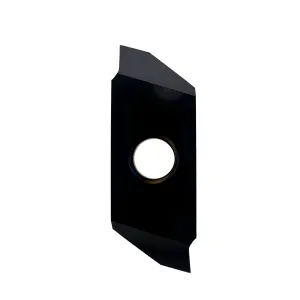
TTPS84 Precision ground threading insert
Category: Precision ground threading insertBrowse number: 130Number:Release time: 2026-10-10 15:15:35TTPS84 Precision Ground Threading Inserts are high-precision carbide inserts designed for CNC threading operations. As a part of the Precision Ground Carbide Inserts series, these inserts are manufactured through precision grinding processes to achieve accurate cutting edges, consistent dimensions, and stable machining performance. Designed for internal and external threading applications, TTPS84 carbide threading inserts provide reliable cutting performance for manufacturers requiring high thread accuracy, excellent surface quality, and efficient machining processes. -
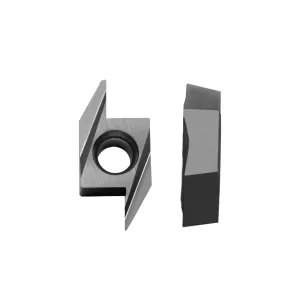
ABS15R Back turning insert series
Category: Precision ground front turning and back turning insertBrowse number: 71Number:Release time: 2026-10-10 03:39:41ABS15R Back Turning Insert Series belongs to precision ground carbide insert range, specially developed for reverse turning, back facing and internal shoulder machining operations.Different from conventional forward turning inserts, ABS15R adopts optimized reverse cutting geometry to solve machining limitations in confined inner cavities and rear shoulder features which cannot be processed by standard turning tools.
News
Category:
No search results found!
Case
Category:
No search results found!
Video
Category:
No search results found!
Download
Category:
No search results found!
Job
Category:
No search results found!
Featured Products
No search results found!



 Phone
Phone